Passion vs Reality

What are you passionate about?
screen-shot-2016-11-09-at-12-18-25-pm
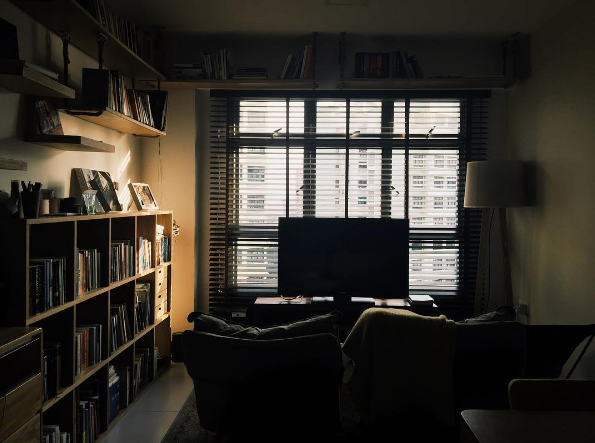
Books, books, books

I’m SUPER passionate about books and reading; spending time at home alone, eating good food; being with people I adore and love; learning new things and becoming better everyday; sleeping in on lazy rainy days.

I’m quite passionate about swimming, writing, photography, Japanese design, Brutalist architecture.

I enjoy traveling, watching movies or a good TV series (like The Good Wife), listening to music.
screen-shot-2016-11-09-at-12-16-19-pm
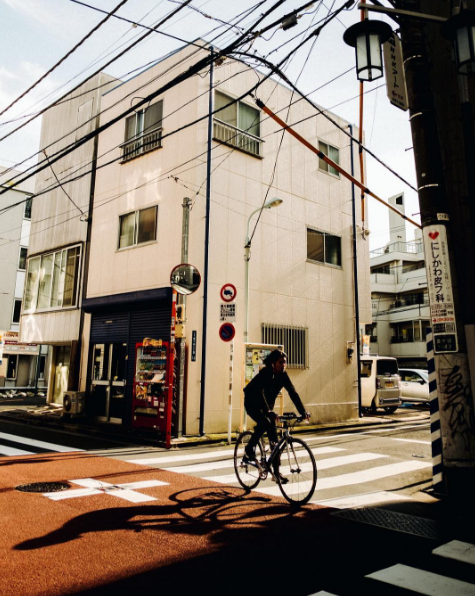
I enjoy traveling to Japan way too much…

I love technology and I love reading about how businesses (particularly small businesses) work.

As you can see, photography is only one of the many things I love to do in this world.

I meet people and often one of the things they like to say to me is, “It’s so great that you are doing what you love for a living!”

And then they want to listen to me talk about how to find that one passion in life and turn it into one’s work.

But there is no such thing as that ONE passion for most of us. Most of us are interested in various things to different degrees, and we like different things at different times. This is a crucial point to remember and recognise as you embark on your path towards turning your passion into reality.

In the startup world they like to use the word “pivot”. To pivot is to switch your business model to something else once you realise it’s not working. That can entail completely moving on to a different product.

An entrepreneur who started out selling furniture might end up creating a digital publishing company that sells e-books, after realising that brick-and-mortar rental is too high these days to make a retail furniture store business practical.

If you are an aspiring painter who lives to paint and wants to make your mark in this world as a celebrated painter, what I just said might sound blasphemous to you. And that’s because you are probably not who I am writing for.

I’m writing for people who are interested in escaping the shackles of conventional employment, and who want to create their own reality by making a living doing what they enjoy.

And that entails thinking like an entrepreneur.

If photography had not worked out for me after my many years of failing at other things, I would have similarly pivoted and moved on (as for when to move on, that’s a topic for a different day).

In a perfect world, I imagine I’d be very happy opening a bookstore. Then I can talk, think, breathe and live books 24/7. After all books are my biggest passion in life. But would that make me happy in the real world? Not necessarily.

Firstly, I might not actually be any good at running a bookstore, so the whole experience might not be very fulfilling for me. Secondly, I am also passionate about being financially secure. If opening a bookstore (my biggest passion) means being in debt (not a big passion of mine), then I might need to reconsider doing it.
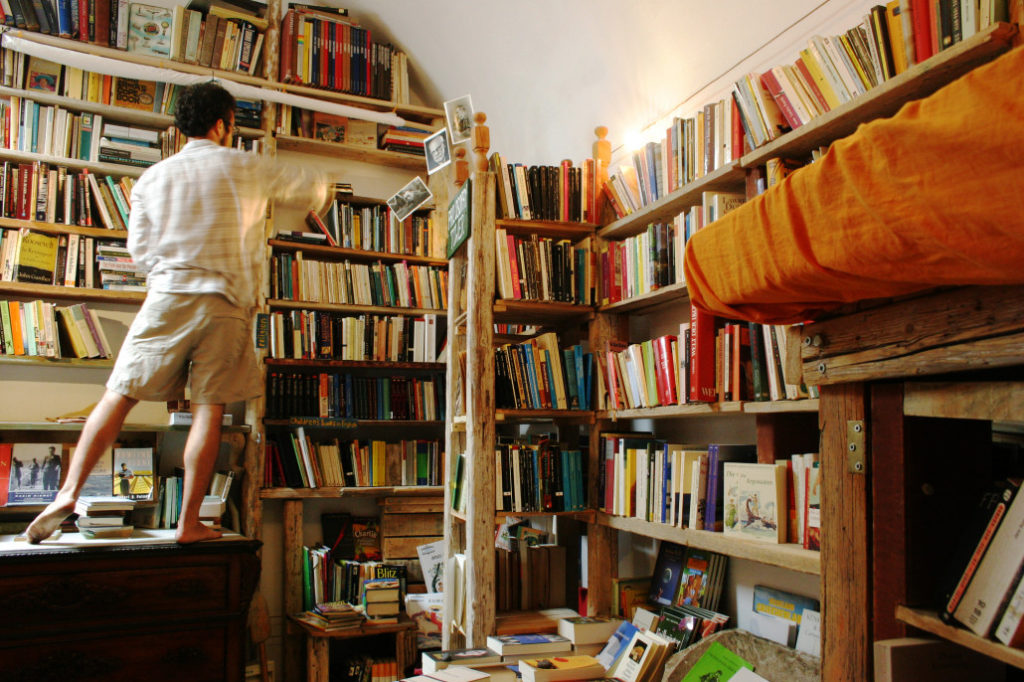
atlantis
Owning a bookstore like this would be nice (photo credit: Atlantis Books)

(However, if I am so passionate about opening a bookstore that I can endure being in debt, then I should probably still go ahead and do it.)

So you see, this “passion vs reality” thing is shaping up to be way more complex than it seems…

To keep things simple, it really boils down to this:

What is your top priority in life?

You have to be very honest with yourself. Is it the pure pursuit of your craft? Is it being able to earn a good living doing what you love? Is it a mixture of both (which, in my opinion, is the best way to live)?

If it is the latter, you will need to stop seeing the world in black and white, in neatly separated categories. You will need to think less like a starving artist and more like an entrepreneur.

You will need to be flexible.

You will need to change with the times.

You will need to be willing to move on from things that don’t work.

You will need to work damn hard at being an actor because you think that’s what you’re really passionate about. And after a few years of backbreaking (and heartbreaking) work you will need to switch paths and work damn hard at maybe becoming a chef (because that’s what you love to do too) after you realise that being an actor is simply not going to work out.

AND THAT’S OKAY.

After all, if you are afraid to fail at things, you will never succeed (unless you’re a forgettable one-hit wonder).

So good luck, my friends, and let’s keep failing together until we succeed!
A Simple Day

For years I dreamed of doing something to spread the idea that happiness can be very simple. It didn’t materialize until last Sunday afternoon, when my friend Cynthea and I finally organised a little event titled “A Simple Day”.

It was glorious.

The location was at an old black and white terrace house in the middle of nowhere (it’s Cynthea’s studio space on a normal day). We had invited three guests to share their stories with us.

Madi, who told us about his fascinating journey to discover his purpose in life; Lionel, who shared tips and ideas about how we can all find financial happiness; and Daniel, whose uproariously funny and also moving talk reminded us to live a life of simple gratitude.

asimpleday
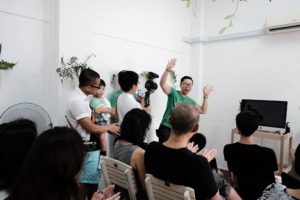
A Simple Day of good vibes, good people and good stories

Both friends and strangers came. People we had never met, friends we’d not seen in a long time. Everyone gathered in a little room, listening to stories that put a smile on their faces.

After the event ended, people came up to us and told us how inspired they were by the afternoon.

Cynthea and I were overcome with a happiness that wrapped around us like a warm, fuzzy blanket. We knew people needed to hear about the idea of simple happiness, but we had no idea how much people needed it.

a1
Cynthea and Jan, meeting for the first time

a2
Daniel, before his extremely entertaining and engaging talk

a3
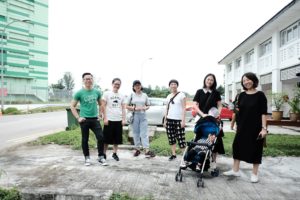
Friends, old and new – thank you for coming!

*

A Simple Day is definitely not going to end at one event. It is a community, a tribe, an idea, a seed, and hopefully a movement.

A movement about what?

A movement about happiness. And not just happiness, but simple happiness.

We want to spark conversations about how little it takes to be happy. We also want to keep all our events and activities entirely free. In a world where everything is a transaction, we want to keep A Simple Day free for everyone to be a part of.

Society imprisons people with its rules and expectations. It tells you to achieve certain things, behave in certain ways. And it tells you to (endlessly) buy things. We want to put a stop to all of that in our own way.

(And for us, it’s an amazing feeling to be doing things we are passionate about in exchange for not money but smiles on other people’s faces! It’s the most liberating and free feeling in the world.)

“Simple happiness” isn’t always self-explanatory, but I think Daniel summed it up very well for us when he used this phrase during his talk –

“Enough is plenty”.

*

I had met Cynthea serendipitously a few years ago at an event; a few months after that we bumped into each other while we were both eating alone. The waiter had seated us next to each other. I think we were both a little apprehensive at being seated next to an acquaintance with whom we now had to make small talk, but we needn’t have worried. We spent the next 3 hours talking about everything under the sun. We talked about happiness. About depression. About our work. About how to find meaning in the things we do. Everything.

And now here we are, trying to change the world together (into a happier one!).

Read more about A Simple Day and what we do at our Facebook page.

And join us next time if you are free!

How to shoot for a top international magazine

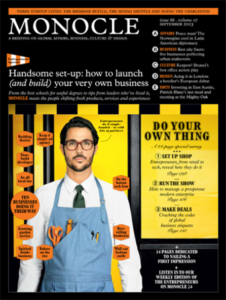
monocle
(The current issue of Monocle)

When I was still a newbie photographer, I really, really wanted to shoot for Monocle. I thought it would be the coolest thing in the world to do (since Monocle was, to me at that time, the coolest magazine in the world). And I knew it would be useful for my budding photography career to shoot for such an influential publication.

The problem was, how do I actually get my foot in the door?

I remember thinking to myself at the time, “So many photographers want to shoot for Monocle. They probably already work with a whole stable of existing established photographers. Why would they commission me? And how do I even make them realise I exist?”

I decided on the simplest solution. I emailed them!

Hi David,

I got your email some time ago regarding the featuring of Casual Days, a magazine I published awhile back, on your Monocle radio show. Just wanted to let you know that the magazine is currently on hiatus, but if and when a new issue comes out I’d love to send you a copy!

Also, I am actually a photographer based in Singapore, working in and around Asia. Here you can see my portfolio of work: https://rebeccatoh.com/

And here’s a link to my photo project “Creative People + Projects” where I meet and photograph creative people I admire around Asia: http://creativepeopleprojects.co/

If your magazine should need a photographer in this region, and you find my work suitable, I’d be more than happy to help / collaborate.

Thank you and have a great day!

PS: Keep up the good work on The Urbanist! Monocle 24 is a breath of fresh air!

Best,
Rebecca

David got back to me and told me to email their photo department instead. And the rest is history. I have since worked with Monocle on many of their editorials in Singapore and Malaysia, and I have also been commissioned by their parent company Winkreative to work on bigger commercial projects.


One of the portraits from my personal project, Creative People + Projects, that I started early on before I became a working photographer

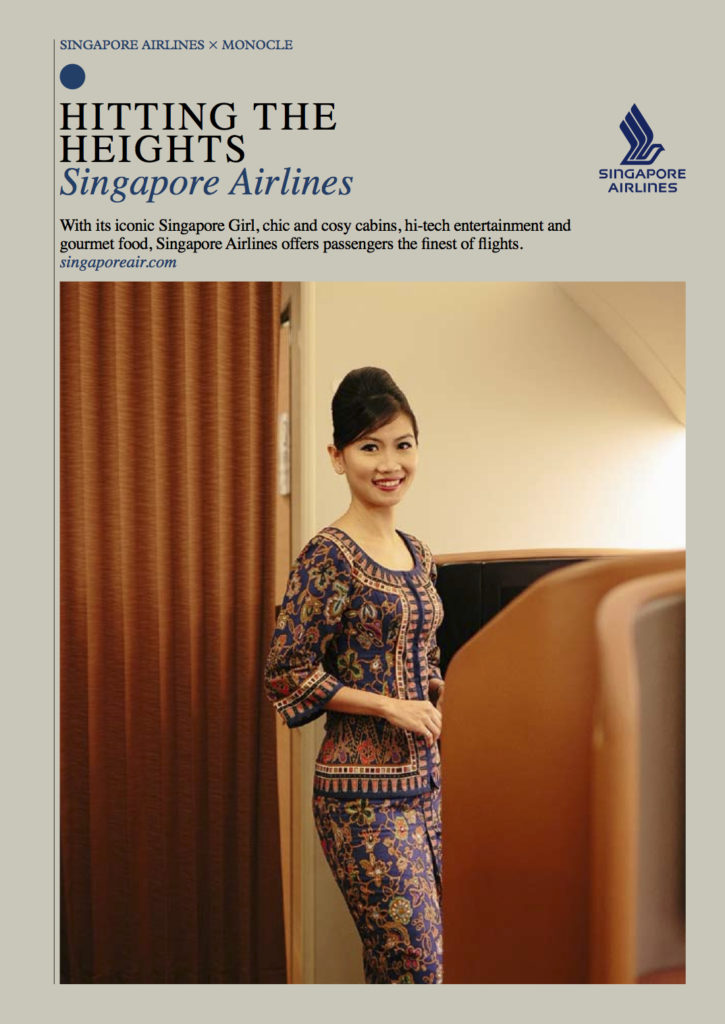
86_adv_sia
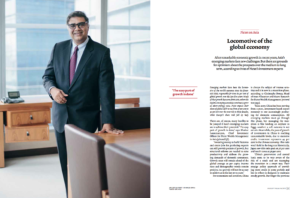
One of my commissions from Monocle – an advertorial of Singapore Airlines for one of their issues

lexus
Winkreative sent me to Okayama in Japan to shoot a project for Lexus

All the jobs above and more (and many thousands of dollars in income) came from my simple decision to ask.

Some lessons there:

(1) Sometimes the best solution is the simplest. To get a potential client’s attention, sometimes all you need to do is knock on their door.

(2) Before knocking on their door, though, you will need to already have a portfolio of work that suits the style of the magazine or the client you want to shoot for. To get that portfolio of work, you probably need to spend some time working for free, either on your own personal project or with smaller companies who are willing to let you shoot for them before you even have a decent portfolio. So go hustle!

(3) It’s not a catch-22. Big brands and companies are more willing to work with new photographers than you imagine. You don’t need to already be established, although, like I mentioned above, you DO need a good portfolio. And you can create that portfolio easily by shooting work that you want to be hired for on your own time. You want to be hired by Adidas? Shoot the kind of stuff Adidas puts out in its campaigns.

(4) One opportunity will lead to more opportunities. Because I shot for Monocle, potential clients who are looking for a similar aesthetic have stumbled upon my portfolio through Google. Or they might have read about me on the bio page of the magazine. Or someone might say to a potential client, “Hey, you know that photographer? She has shot for magazines like Monocle. She must be good.” Your credibility as a photographer builds from things like this.

(5) Apply the age-old adage of “Ask and you shall receive” to your life. You will be surprised at the opportunities that people are willing to give you.

Finally, in the spirit of this important lesson, watch this amazing talk by Amanda Palmer about the magic that happens when you have the courage to ask.

Sometimes it is about the money

When I was 20, I was a huge idealist. And a dreamer. I didn’t care for money at all. I thought it was the least important thing in the world. Passion was important, but not money.

After one year of university as an English major I dropped out and started a cafe. I’m pursuing my passion, I thought to myself, who the hell cares about profit?! This thought guided the (rather disastrous) way I ran the cafe. My startup capital was money I’d borrowed from my parents (since, as a student, I had zero savings). The cafe closed after less than two years.

casualpoet_03hr
The cafe I started when I was 20

After the cafe closed I was adrift. I had projects I wanted to work on, things I wanted to pursue, places I wanted to travel to, business ideas I was excited about – in other words, I had dreams, but I had no money. With no money, I had no freedom to pursue any of these things. This was the first time I began to have an inkling of the relationship between money and freedom.

In the next few years that ensued, I hopped from one thing to the other, hoping to pursue my passions. For about six months I worked in a local arts organisation; I did freelance writing; I published a magazine; I started an online publication; I tried part-time radio deejay-ing. My passions could barely feed me. And I began to realise this: I wasn’t satisfied with being a starving creative. But I didn’t want to make money doing something that sucked the soul out of me either. I wanted to have the cake and eat it too. This was a big and important mindshift for me.

dj
My part-time DJ days

casual-days
Casual Days, the magazine I published with $4,000 – made a loss on it

When I finally settled on the idea of becoming a photographer in 2012, it was after years of trying and failing repeatedly. Photography was something I’d always loved since I first picked up a camera when I was 17 or 18. But I hadn’t dared to dream that I could one day become a professional photographer. It felt too far away, like a distant land I could never reach. I had no idea how I could put a foot in the door of professional photography. But what did I have to lose? I had no money, no prospects (or it felt like that at the time, since I had dropped out and didn’t have a degree to my name). What I did have… was quite a bit of courage.

Everything clicked for me the moment I decided to become a photographer. An acquaintance that I’d met from my cafe days – who heard about this new move in my life – came out of nowhere and offered me my first well-paid photography job. He started the ball rolling for me, in a sense.

Luck played a big part too. I was entering the market at a time when the market was slowly shifting away from the kind of over-produced, over-glossy campaigns that have been popular for the longest time. Companies and brands wanted images that were authentic, intimate, and they wanted photographers who could bring something personal to their brands. My style was a good fit. If I had tried becoming a photographer ten years ago, when I was 20, I might not have made it (plus I sucked at photography then).

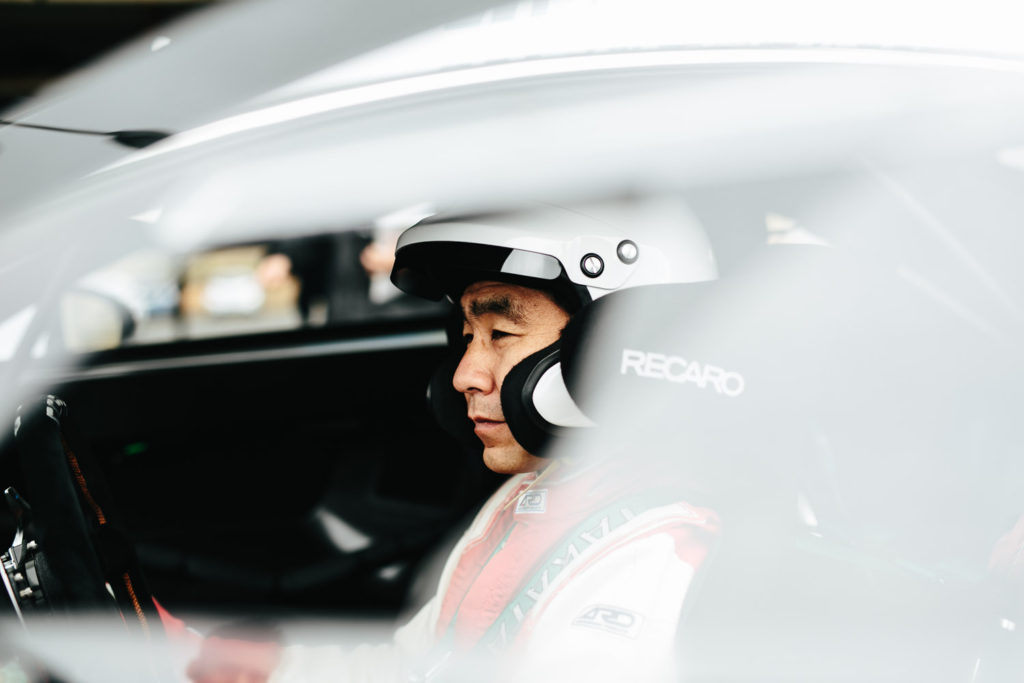
pictet
One of my first few jobs as a young and ignorant aspiring photographer – this was commissioned by Winkreative, the parent company of Monocle Magazine

My previous failures – the long road I’d taken – began to make sense.

Something else began to change too. For the first time in my life, I began making money. Because my skills were relatively valuable, I was paid a higher premium for it. And I wasn’t afraid to ask to be paid a premium, since I believed in my own value.

(Of course, before this could happen, I was teaching tuition for a year, shooting for my friends or friends of friends for free, taking up photoshoots that paid me $280 for 4 hours. Or $150 for 50 shots (over 3 hours). It was brutal.)

In a perfect world, we wouldn’t need money. We wouldn’t even need to learn about money and how it works. But in this world that we live in, we do. If you don’t, you will suffer. You will settle back into an unsatisfying desk job. Or you will settle for being a lowly-paid creative. Don’t settle.

As a creative, we all face the same problem of wanting to pursue our passions and wanting to live comfortably while doing it (unless you are content with being a hobo, then maybe this article isn’t for you). We must then learn to think about money in a way that can best serve us.

I am deeply passionate about this topic because I see too many of my friends and fellow creatives slaving away doing good work for little to no money. I want to change that.

My advice is this (and take it only if you think it makes sense): don’t work for too little money. It’s okay at the beginning, when you are starting out, but once you become sure of your skills, go out there and charge a premium for it. Don’t let other people exploit you and your talents. Believe in your own value, fight for what you are worth. Your belief in your own value is reflected in how much you charge for your services.

In fact, as a creative, in my opinion, the best thing you can do is become a freelancer. You can earn much more as a freelancer (than as an employee) if you play the cards right. It might take awhile, but you can easily earn more than the take-home pay of $2,000 a full time job pays you to be a marketing executive or a copywriter or an illustrator.

I know I am at risk of sounding like a money-grubber. I am not. I spent years dirt poor doing things I love. But I learnt to think of money as being important because it gives me options, the chance to work on passion projects, confidence, and freedom. Sweet, sweet freedom. And it allows me to pay it forward.

passion
Recently: working on a passion project to photograph 100 others who were born in the year 1986

I will write more on this topic – and hopefully with more actionable steps – but for now, I wish you luck, and I hope that you will experience a mindshift that will help your passion to converge with profitability.

That’s when magic happens.

(I’d be happy to reply your emails about this topic if you want to write me. Email me at rebeccatohphoto[at]gmail.com)

My new relationship with money

I don’t think of money the way I used to think of money just 6 months ago.

6 months ago, I’d walk into a mall thinking of what I could potentially buy to make myself happy.

Today, I walk into a mall only to buy what I need (if I need a stick of butter to cook dinner with I buy a stick of butter, full stop).

6 months ago, I’d walk into a bookstore and buy any book I wanted. Usually I’d buy at least two books or more. Sometimes three or four at one go. It was easy for me to spend $100 at the bookstore per visit.

Today, I borrow all my books from the public library. Most of the books I want to read are available in the library anyway. If it’s not, I don’t read it (there are so many other books in the world to read). Or I buy it on Kindle, so I save 30% or 40% or sometimes 50% off the paperback price. But even this happens only rarely nowadays.

6 months ago, I’d not blink an eye about spending $800 on a painting or $1,000 on a foldable bike. I needed these things, I’d tell myself. I needed them so I could try my hand at art collecting or be able to cycle to the swimming pool.

Today, I don’t buy random big ticket items anymore. I just don’t.

Have I become cheap? Not really. It’s just that I have experienced a crucial mindshift with regards to money. I no longer think of money as a currency I can use to buy things with; now I think of it as resources that I’d gained through the exchange of my own very precious life hours.

All the money I have, I have had to work for them. I’d to put in hours under the sun or in the studio, managing clients, shooting, editing. I had spent time – days and weeks and months and years of my life – in order to earn these money. Time that I can never get back.

So every time I buy something, I remind myself that the money I have now is actually time I can never get back.

It makes me think twice about what to buy.

Should I buy the latest iPad Pro or should I use it to, say, buy the freedom to not work for a month? In that month I can connect with my loved ones, travel somewhere to recharge, work on a passion project, etc.

The choice is obvious to me.

Starting a business with $100

I have been reading “The $100 Startup” by Chris Guillebeau lately. It’s a good read for me because I’ve always been interested in the idea of micro-businesses – businesses that can be run by one person, and that doesn’t need a huge amount of money to get off its feet.

When I started doing photography, my first few jobs were done using a friend’s camera. Yes, I didn’t even have my own camera! So in a sense my startup cost was almost negligible. Later on I bought my first proper camera, the Canon 5DMI, and paired it with a USD$100 Canon 50mm 1.8 lens. People always think you need expensive gear to shoot for big jobs and big clients, but this $1,000 setup served me well throughout my first year or so as a professional photographer. So you really don’t need a lot of expensive equipment to become a photographer, just as how you don’t need a lot of capital to start a successful business.

According to Guillebeau, “where passion or skill meets usefulness, a microbusiness built on freedom and value can thrive”. When you can provide true value, people will be willing (and sometimes queuing up) to pay you for it.

How do you find that thing that people are willing to pay for? It’s useful to ask yourself, “How can I HELP people become HAPPIER with the SKILLS that I have?”

Somewhere in there lies the answer that you’re looking for.